1-800-634-7238

Maine Moose Tours Report

Moose Tours are offered daily and year-round. For booking and pricing please see our Moose and Wildlife Tours page.

Be sure to check out these videos:

Moose report, 2011

click photo to enlarge

Moose Tour Date Sightings & Notes
August 18th This evening, Jim took his guests to Mud Brook via pontoon boat. Guests had the chance to observe a family of Common Loons and a Great Blue Heron. Blue Herons feed on many things such as fish, frogs, salamanders, snakes, crayfish, dragonflies, grasshoppers, and many aquatic insects.

August 17th Matt took guests on the boat this evening. A cow and a calf were spotted in Mud Brook. There were many bird sightings as well. A loon and her baby, a Bald Eagle and an Osprey.

August 14th This evening, our guide Rob took guests to Mud Brook via pontoon boat. While no moose were spotted, a variety of bird life was- including four Common Loon, two Osprey and one Great Blue Heron. Did you know that loons make four different calls?

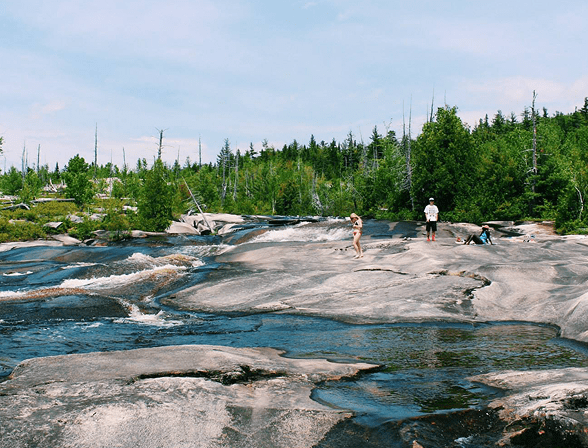
August 11th This evening our guide Josh took guests to Stump Pond and Compass Pond. August is admittedly a difficult time to spot moose. However, stopping at the rocks overlooking the Cribworks, a class V rapid on the Penobscot River is certainly a breathtaking view!

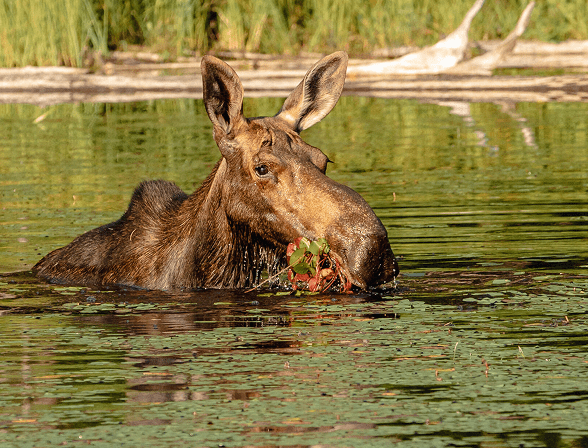
August 8th Via pontoon boat, one moose was spotted. Moose enjoy standing in the pond and feeding on various aquatic vegetation such as water lilies, as our guests observed!

August 7th Maine is a perfect space to spot Bald Eagles! During this tour, our guide Josh took his guests on the lake, where an eagle was observed flying overhead, as well as four Common Loons. Eagle nests are not an uncommon sight in this area, they are built in large trees near rivers or bodies of water such as Millinocket Lake.

August 6th This morning, our guide Jim took his guests to Mud Brook via pontoon boat. During this time two moose were found! A cow (female) and a calf (young moose)! In addition, people were able to observe Common Loons and a Bald Eagle.

August 4th This evening, our guide Michelle took guests down the Golden Road (a famous logging road) via van. During this tour, guests observed the Cribworks Rapids on the Penobscot River. No moose were sighted, however a variety of bird life such as a Great Blue Heron and Common Loons were found on River Pond. Michelle also highlighted a variety of local flora and fauna.

August 3rd This morning, our guests set out at 7am via van. Our guide, Michelle took guests to Compass and River Ponds. We spied no moose, however several loons were obeserved. During a trip down Telos Road a female we found a female moose in an area called the gravel pit. The moose enjoy licking the salt off the wood in this area, making it a great place to find one!

August 2nd Today was a great day to look at and listen to loons! Our guide, Josh brought the guests to Mud Brook where twelve loons were found!

July 3rd Out on the Hurd Pond Rd today we saw 5 moose, and one 1 deer.

July 2nd While no moose made an appearance this morning or afternoon, we did observe quite a number of loons. Millinocket Lake has a large population o f the Common Loon and now is the time we start to see chicks.

June 30th Banner day from the boat! We not only saw moose but a bear as well!

June 29th On the roads and visiting our neighbor, Baxter State Park, today. Lots of turtles this time of year but we also saw four bull moose, two cows and one deer. .

June 28th On the roads we are seeing lots of moose, tonight four and two ducks.

June 23rd On the roads we are seeing lots of moose, tonight four and two ducks.

Tuesday, June 21st Headed up the Golden Rd to Telos this evening and while the moose was abundant we also got to see a snapping turtle, woodchuck also know as whistle pigs, and a Pileated Woodpecker.

Monday, June 13th Up to the Golden Road these days we are seeing lots of moose. Today in particular we saw three cows and one bull. While moose are certainly exciting to see a trip along the Golden Road can also include a number of bird sightings. Small raptors such as Kestrels, Coopers Hawks, and Merlins can often be found in the open areas of the power-lines and along the river. Kestrels can be easily identified by their hovering talent and are the most common falcon in North America. They are easily identified by their vivid and colorful plumage. .

Saturday, June 11th On the road again as we battle wind and rain on the lake. Not to worry though, this is the best to place to be to see moose right now! This evening we spied four bulls and two cows not to mention a grouse, loon and a turtle. Maine is home to seven species of turtle including the occasional Loggerhead Sea Turtle. In our swamp, ponds, rivers and lakes, however, you can find Box Turtles, Eastern Painted Turtles, Snapping Turtles, Wood Turtles, Spotted Turtles and Musk Turtles. Keep your eyes peeled on the road and ensure these guys make it from one side to the other in the spring and early summer!.

Friday, June 10th An easy day on the Golden Road! Two bulls and a cow made an appearance.

Monday June 6th

Today proved to be a banner moose day! In the morning our intrepid Moose Guide saw 10 adult moose and the first calf of the season! In the afternoon, she was able to spy 15 adult moose and the calf again! Gestation for moose is approximately 240 days. They breed in the fall and give birth in late May and early June. Twins are actually quite common occurring in 1 out of every 2 or 3 births. Be sure to check out our Facebook page for the most up-to-date footage, sightings and information.

Tuesday, May 31st We are back on the roads looking for moose! Last night we saw 5 as we drove up the Golden Road to Telos Bridge. One young bull happily stripped lush green leaves off branches and was happy to pose for camera and film! Make sure to watch for our new documentaries being released each a week. This young guy will be starring for sure along with the snowshoe hare and fox we encountered last night. Om a quick note, moose antlers grow an inch a day! Antlers are the fastest growing animal tissue thanks to the vascular velvet which covers the antlers as they are growing. Moose lose their antlers every year. Unlike horns, antlers are regenerated every year this includes animal species such as deer, caribou, and elk. This is a great time of year to see wildlife. More information about our moose tours.

Sunday September 26th

After a long dry spell, we spotted two moose today at Stump Pond in Baxter State Park. Baxter State Park is located only 8 miles from our Twin Pines Camps and 4 miles from the Penobscot Outdoor Center. It is the home to not only Maine’s highest peak, Katahdin, but also over 200,000 acres of Maine wilderness to explore.


Wednesday September 8th While today we did encounter 1 Bull Moose at Sandy Stream Pond we also saw a woodchuck. Woodchucks, also known as ground hogs and whistle pigs, are a member of the rodent family. They are one of Maine’s only true hibernators dropping their heartbeat from 100 beats per minute to 4 beats per minute during winter hibernation. Many people believe bears to be a winter hibernator, and while they do adjust their body functions for winter they have the ability to fire it up again. Bears give birth during the winter and are known to come out of their dens on warm days. Woodchucks, however, are down for the count.

Thursday September 2nd

Back to Moose! Our endeavors paid off today. We saw a cow moose this morning and a yearling bull in the afternoon. Moose belong to a classification of mammals called ungulates which means they have hooves, other examples include: zebras, bison, elk, deer, rhinos, cow. Moose are also ruminants meaning they have four stomach chambers. In order to breakdown the cellulose found in the food they eat, primarily twigs, shrubs, ruminants require these extra chambers to extract useable nutrients.

Monday August 30th Bald Eagles are year round residents at Millinocket, Lake. We often see them on our Moose Tours and raft trips down the Penobscot River. And while we know they are Bald Eagles here are a few facts which might intrigue you about our national bird. Eagles can fly at altitudes of 10,000 feet and achieve speeds of 30-35 miles per hour during level flight. They can live as long as thirty years in the wild and have approximately 7000 feathers. Bald Eagles are strong swimmers and mate for life. Currently, there are 9,789 nesting pairs of Bald Eagles in the United States and are unique to North America.

Sunday August 29th

The most amazing wildlife sighting took place yet again today! And I believe it because I have seen it. Is it documented on film? Aside from the eagle, osprey and loons we saw today, we saw a swimming red squirrel. This squirrel was not wading or splashing about but swimming in the water.

Saturday August 28th
While it is common to see Bald Eagles on Millinocket Lake it is not common to Golden Eagles. No moose made an appearance on our afternoon Moose Tour but we did have the rare chance to see a Golden Eagle. Golden Eagles are North America’s largest bird of prey and typically inhabit the Western half of the United States. These birds can dive at speeds of up to 150 miles an hour. They are capable of killing large prey such as cranes, and domestic livestock although they typically subsist on rabbits, ground squirrels and prairie dogs. A treat to see in this neck of the woods for sure!

Thursday August 26th During our PM Moose Tour by van, we had the opportunity to see a bull moose, two deer, Pileated Wood-pecker, Great Blue Heron and Yellow Shafted Flicker. While Moose and Deer can be easy to identify based on their color and size, identifying birds can be trickier. It is important to know where to look and to note color, shape and size. Pileated Wood-peckers can often be seen along roadsides feeding on ants and other insects. They are distinguished by their large size (as big as a crow) as well as distinct black and white patterns. Males have a red head which is striking. Another species commonly seen is Northern Flicker’s also known as a Yellow-Shafted Flicker. These birds can be hard to see straight on and typically are identified as they fly away: note the red triangle at the base of their neck or yellow blaze on the rump.

Wednesday August 25th When one heads out on a Moose Tour it is easy to dismiss some of the more common creatures. This morning on the Golden Road we had the opportunity to see a Ruffed Grouse and a chipmunk. Chipmunks belong to the squirrel family and are the smallest members.  While most of us know they like seeds, nuts and berries. My fiancée recently brought home a picture of one eating a baby bird. As appalling as this may seem it is important to note that they are omnivorous and aside from vegetarian selections will eat birds eggs, snails, and other small mammals.

Tuesday August 24th No moose today…Rats!  However, we rewarded with Common Loon sightings on Millinocket Lake. These birds will migrate south for the winter and change to their winter plumage which is a gray brown back and white underbelly. This is in stark contrast to their summer colors of black backs and white breasts. North America is home to five species of Loons including: the Red-throated Loon, Pacific Loon, Arctic Loon, Yellow-billed Loon and the Common Loon.

Monday August 23rd
Our trip today took us along the Golden Road, the supporting, silent cast member of American Loggers on the Discovery Channel. While we did see a 1 bull moose interestingly enough we spied a Southern Red-backed Vole. Southern Red-backed Voles like to live in cool damp forests, bog and swamps. They remain active all year although the population does drop off significantly in the winter. Also, on this excursion…lots o’ ducks!  It is time to head south!

Sunday August 22 We took to the roads and the water for this all wildlife tour.  In our travels we spied a bull and cow moose. Eagles, loons and herons made their daily appearance. We also saw a Common Snapping Turtle. Snappers as they are sometime called can weigh upwards of 40lbs and are the second largest of the freshwater turtles in North America with the Alligator Snapping Turtle weighing in at 130-140lb!  They typically eat meat and can strike out at prey as fast as a rattlesnake!


Saturday August 21 Our early risers today saw a cow moose and a number of bird species on their AM Moose Tour. Soon it will be time to keep our eyes out for those migrating south! Loons, herons, geese as well as terns and duck species will head to the coast or south soon to take advantage of open water.

Friday August 20

PM Pontoon Boat Tour. Heading up Millinocket Lake is a birders paradise. Sighting this evening includes common terns, eagles, and loons. During our motor up Mud Brook we found a cow moose and painted turtle. Interestingly enough Painted turtles can leave to be 60 years old! 


Thursday August 19 AM and PM paid off for our tour. We saw a bull and cow moose, a huge snapping turtle and birds.  Osprey, eagle, loons and herons are all in abundance on our Millinocket Lake and Mud Brook. Osprey are one of the largest bird of prey in North America and can be found on all continents except Antarctica. Identify them by their white breast and bellies and black back and wings. Fish make up 99% of their diet.


Wednesday August 18 Another PM Pontoon Boat tour…this one has a twist though!  We were lucky enough to spy black bear cub! To compliment this incredible sighting we also saw a bull moose and four blue herons.

Sunday June 20th

PM tour by van and boat. We saw 3 big Bulls in River Pond during an evening rainshower. And as the sun broke we motored into Grant Brook in the Pontoon boat where 3 young bulls enterained us as the sun set. Hot weather is definitely bringing the Moose into the ponds to feed.

Monday June 14th

Guided hike to Blueberry Ledges and the River Pond Trail. This was a morning trip and we saw Hawks, Partridge with chick and 1 yearling Moose.

Sunday June 13th

Due to damp and windy weather our PM tour went by van. We travelled the Golden Road to the Telos Region and saw 5 Bull Moose, 3 Cows, 1 Bear and 1 Cub.

Wednesday June 10th

Guided Moose and Wildlife Tour by van last night was a great success! Last nights tour by van saw: 4 - cows, 2 - bulls, 3 - deer, 2 - blue herons, several geese Tuesday June 9th : Nick guided a Moose Tour today and our guest "loved him"! (see letter below on June 3rd about Nick) He was able to show/guide them 3 bull moose, 5 cows and 1 calf!

Monday June 8th
Jeni guided and saw 2 very large bull moose and 1 loon. The kids loved it!

Sunday June 7th Sunday we have a tour in the AM and PM. Dave went by van for both tours and the guests were very happy at the sightings. AM TOUR: 1 - cow, 3 - bulls, 1 - doe PM TOUR: 2 - cows, 4 - bulls, 1 - bear, 1 - osprey, 1 - eagle

Saturday June 7th Saturday Dave went by van and saw... 6 Bull Moose 2 Cows 1 Calf 1 Beaver 1 Osprey 1 Sharp-Shinned Hawk

Friday June 6th On Friday nights tour by van with Guide Dave White the following was seen: 5 Bull Moose 1 Cow 1 Deer 1 Turtle 1 Beaver 2 Geese Ducks with Chicks

Sunday May 31st Jenny guided an AM moose tour... 4 moose (2 young bulls, 1 adult bull, 1 cow), 2 loons.

Friday May 29th Nick did a PM moose tour and saw 1 bull and 2 cows.

Thursday May 28th
Nick did an evening Moose Tour and saw 11 Moose!!!! (aka: Swamp Donkeys) WOW!!!!!!!!!!!!

Wednesday May 27th
Jenny did a full day Moose and Wildlife Tour and saw lots of moose and other wildlife!

Tuesday May 26th 4 Bulls!

Monday May 25th Dave did our PM tour by comfy truck, 3 moose, 2 bulls, 3 beavers

Sunday May 24th PM tour by van saw 4 moose, 3 bulls

Sunday May 24th
AM moose tour by Pontoon boat... Saw the cow and her twins closer and nearer to the water... we will keep checking on her and watch the baby calf twins grow, saw a few loons and a hawk

Saturday May 23rd
Matt did a afternoon scenic boat ride/cruise and moose tour.... Mom cow and twin baby calfs that were no more than 2 to 3 days old... they are staying on an island so she should be there a while until the calfs can swim, so we should be able to visit see progress with the calfs. Plenty of loon, 1 eagle and a very scenic Mt. Katahdin!

Friday May 22nd 3 Moose, 1 small bull

Thursday May 21st PM Moose Tour produced 4 moose

Tuesday May 19th Nick did a guided tour this AM by van and saw 7 moose, 3 bulls and a hawk! They are really starting to move and are coming out after a long winter... call NEOC at 800-766-7238 today to book a guided moose tour. We should be running tours by pontoon boat as well starting next week. Cabin and Moose Tour Packages available.

Monday May 18th
Nick did a guided tour this AM by van and saw 3 moose and 2 eagles.

Thursday April 30th
FIRST TOUR OF SPRING!! Wow! We had a moose tour this afternoon, early evening by van and saw 5 moose! Pretty good for early season. We have tours running daily by van until the lake warms up a bit and then we will offer them by pontoon boat and other water craft as well. Call us today at 800-766-7238 to make a reservation.