800.634.7238

Wildlife Photography Workshop


Mark Picard Wildlife Photography banner


North Maine Woods Photography Workshops - Join us for an all-inclusive wildlife photography workshop in and around northern Maine's Baxter State Park - Katahdin Region. Now in their 10th year, group workshops are offered on pre-scheduled weekends during peak Moose viewing in June, September and October. Or, register for a private one-on-one workshop experience where you choose the day(s). 


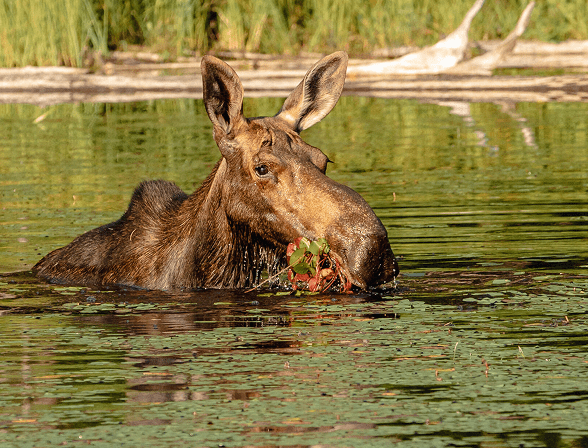
June provides opportunities to photograph a world coming to life after a long Winter making it an an ideal time to photograph in Maine's North Woods. Moose feed heavily in ponds this time of year, often times along side their cinnamon colored calves. Bull Moose antlers are covered in velvet and can grow as much as an inch a day. Picturesque indigenous wildflowers, rushing waterways, boreal birds, plus other flora and fauna also provide inspiration and opportunities to learn new skills. This workshop session is offered June 29 - July 1, starting at 3:00 p.m. on Friday running through to Sunday at noon.  


September and October workshops coincide with the Moose Rut and spectacular Fall color that the Katahdin Region is noted for.  Those thirty five pound calves from Spring now have grown a bit, weighing in at about 400 pounds! The massive Bull's antlers are finished growing, and the velvet has been shed for the mating season. This is the time to capture these magnificent creatures in courtship and mating behavior with a backdrop of Fall color. The first two Fall workshops start at 2 p.m. on Friday and run through to Sunday at noon, and are offered for two three day weekends, the first running from Sept. 28 - Sept. 30th, while the second weekend runs from Oct. 5-7. Due to popular demand we have added a third workshop to this year's schedule. With guest photographer, PhotoShop and Lightroom expert Dave Kelly the October 11-15th workshop provides 4 full days of wildlife photography instruction.


Package Price for group workshops include lodging at the finest establishments in the Region, full breakfasts, picnic style lunches, first class dinners, snacks, transportation to and from locations during the workshop as well as expert photography instruction. Package Prices starting at $950. per person with a maximum of 8 participants to insure individual instruction. Visit our website for more information including itinerary and easy registering. 


One-on-One Photo Workshops - Designed to offer the participant an in depth learning experience to maximize their photographic skills and proficiency these sessions are scheduled during peak viewing times based on a mutually agreeable date(s) with a three day maximum. Each participant's individual photographic needs will be addressed to insure the best instruction possible. All aspects of nature and wildlife photography will be covered including proper composition, lighting, depth-of-field, equipment, lens selection, animal behavior, special techniques and more. Utilize Mark's 30 years of experience photographing wildlife in this breathtakingly beautiful region of Maine and take your current photography skills to the next level! Post production, workflow and PhotoShop after the image has been captured are all also covered. Daily fee is $450. per day or $600 per day with a participating spouse or family member. Meals and lodging are not included. Contact me to reserve a date. 

North Maine Woods Photo Collage
Spring  and Fall - North Maine Woods Photography Workshops
 
A few "pointers" you might consider when photographing Moose and other wildlife.
  • Always focus the camera on the eye (or the head) of any wildlife photography subject. If the eye area is not in sharp focus, the general impact of the photograph will be lost.
  • Try to maintain a level horizon line in the background of your photographs. Refer to actual horizon lines such as a shoreline, a tree line, or another point of reference to help you achieve this.
  • Don't be afraid to rotate your camera and shoot photographs vertically! In many instances the photo's composition would benefit greatly from shooting it vertical, especially when photographing wildlife such as a moose from head on.
  • Try to avoid cropping out or "cutting" off the Moose's or animal's limbs when possible. If you must crop, try to crop above the joints (such as the ankle and knee joints). Sometimes, as in photographing close-up portraits, some cropping will be necessary. If you are including all of the animal's body and legs, always include the "virtual" area hidden below (as in grasses or water, for instance) where the feet would normally show as well.
  • Leave room in the photo on the sides and try to lead the moose or any wildlife subject into the space around it in the direction it's headed, while leaving some "space" for the Moose or subject to go. This approach usually lends itself to a more pleasing composition in general.
  • Don't be afraid to take several images at different focal lengths (such as with a zoom lens). Include images that show the Moose or subject's environment as well. Some of the best photographs that have the most impact are taken with the Moose or main subject occupying only a small portion of the overall photo. This method supplies the viewer with a ton of information! Of course, that's not to say that you shouldn't get that frame-filling portrait of a massive bull moose adorned with a huge rack! Try to be diverse and capture both images when time and conditions makes it possible!
  • Use a sturdy tripod! There is no other single bit of advise that I can offer that will make such a dramatic difference in the quality of your wildlife images. A sturdy tripod and properly rated ball head will allow you to capture crisp images with slower shutter speeds as well as track moving subjects with ease.


We hope to see you at an upcoming wildlife photography workshop! Mark and Anita 

Quick Links...